
Mme de Rênal’s Awakening to Passion
The Second SexThis flow traces Mme de Rênal’s movement from sheltered domestic life into an individual passion, followed by guilt, social constraint, and a renewed choice when she meets Julien again.
increasing Bearing strength in each event
 decreasing
Bearing strength in each eventdecreasingA Sheltered Wife
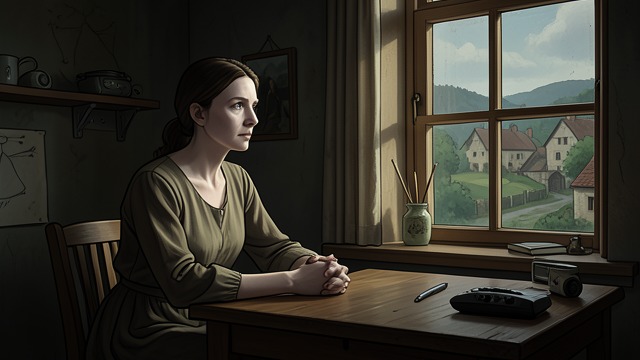
Life Within a Narrow World
Domestic confinement
Mme de Rênal is presented as a married woman whose life has been shaped by a limited provincial environment and by the expectations imposed on a wife. Her delicacy and sensitivity set her apart from the vulgarity she perceives around her, though she does not initially understand what those qualities mean.
She has little experience with love as a conscious choice. The world has given her a role and a household rather than a path toward independent action or self-knowledge.
A hidden independence
Her emotional independence is not absent; it is simply unrecognized, even by herself. Stendhal’s account treats her restraint and innocence as the conditions in which a generous, intense capacity for feeling can emerge.
Meeting Julien

An Unforeseen Attachment
A new presence
Julien’s arrival disrupts the familiar rhythms of Mme de Rênal’s life. Her feelings do not begin as a clear decision or a declared rebellion; they emerge gradually through the attention and emotional intensity that his presence awakens.
The relationship draws her beyond the passive existence she had assumed. Through desire and attachment, she begins to discover that her heart is capable of choices not dictated by the household’s ordinary rules.
The risk of feeling
Her love is shaped by the very limits that make it dangerous. She is not approaching an equal world with secure freedoms; she is trying to understand her own desires while living under social and marital expectations that condemn them.
Love Against Convention

Passion and Self-Discovery
Beyond accepted values
Mme de Rênal’s attachment to Julien presses her beyond the moral rules that have organized her life. Stendhal presents this movement not as a simple embrace of scandal but as a test of whether she can trust her own feelings against the authority of convention.
Her courage remains hidden beneath innocence and hesitation. Because she has lived within a sheltered world, she does not always recognize the strength of her own decisions; nevertheless, her passion expresses a freedom that had been waiting for an occasion to act.
The cost of choice
The relationship gives her a new sense of happiness and also exposes her to fear, guilt, and the possibility of social ruin. What becomes precious to her is not abstract defiance alone, but a real emotional life she has never before been allowed to claim.
The Confessor’s Letter

Guilt and Retreat
A forced return to moral rules
Under pressure from a confessor, Mme de Rênal writes a letter that helps separate her from Julien. The act shows how the institutions surrounding her can redirect her feelings and make her distrust the very freedom she had begun to experience.
Her remorse is not proof that the passion meant nothing. It reveals the force of a social order that has taught her to interpret desire as guilt and to doubt her own judgment when it conflicts with accepted morality.
A divided self
She returns to a more constrained life, but the earlier experience cannot simply be erased. Her inner conflict becomes one between the role she is expected to resume and the happiness she has known through a relationship she is now supposed to condemn.
A Renewed Choice

Returning to Her Own Heart
Evidence beyond doctrine
When Mme de Rênal sees Julien again, she once more entrusts her feelings to him. The recurrence of her love shows the limits of the reasoning and moral instruction that had tried to govern her earlier choice.
Stendhal presents her as a person whose freedom is real but difficult: she does not act with perfect knowledge or untroubled confidence. Her generosity and passion emerge through hesitation, error, and the pressure of the values she has inherited.
A life made consequential
Her story matters because she is not merely an instrument in Julien’s destiny. Through the relation, she experiences the risk of choosing and the possibility of making her own feelings count, even when the social world offers her no easy way to reconcile that choice with her assigned role.
Before Julien enters her life
During Julien’s early days in the household
As her relationship with Julien deepens
After the relationship becomes vulnerable to exposure
After Julien returns to her life
